
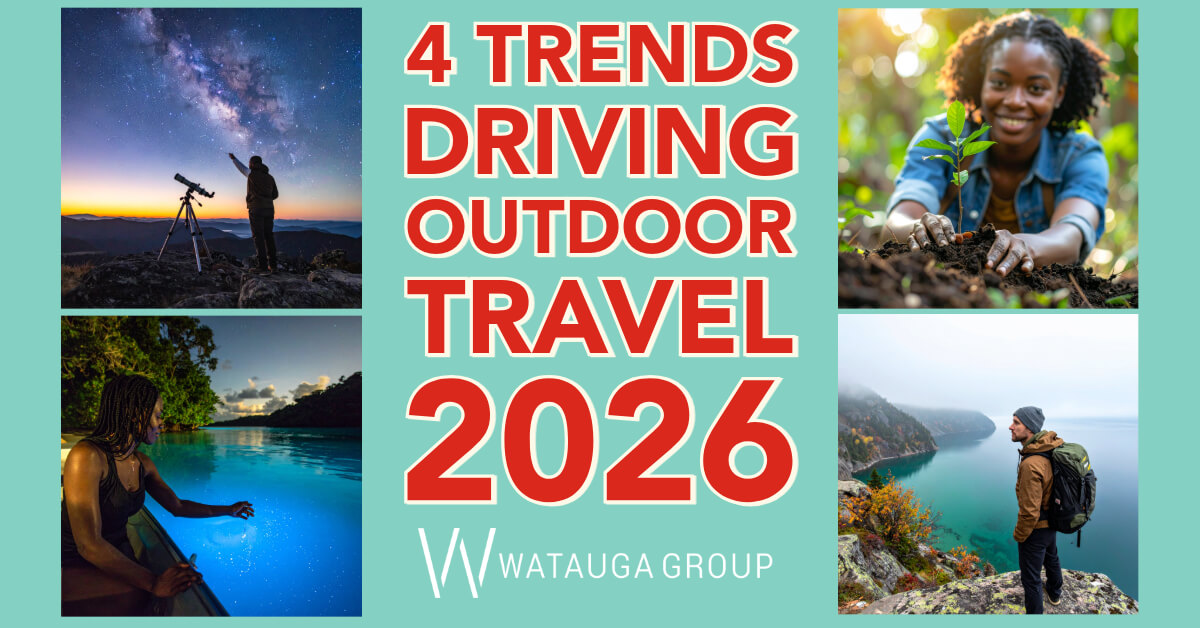
An outdoor travel marketer, do you know how to reach the person who flew thousands of miles to stand in the path of a solar eclipse? The person booking a dark sky lodge in Utah? How about the person driving to a coolcation destination in Duluth to enjoy the massive heatsink that is Lake Superior?
All of these travelers are motivated by experience rather than the destination itself. If your campaigns are still selling the destination rather than the experience, check out our strategic brief, Winning the Experience-Driven Consumer, available here when you get a chance. In the meantime, let’s look at the trends driving consumers to look beyond the bucket list when booking outdoor travel.
Adventure and Outdoor Travel: The Baseline That Is Splitting
Adventure travel was once a broadly active category, comprised of hikers, climbers, paddlers, and cyclists. Now, there are numerous sub-segments that demand campaigns with tailored messaging.
As a marketer, your challenge is deciding which of these smaller groups your brand is best positioned to serve. You have to build specificity around that answer, rather than trying to speak to the entire category with one voice.
An outdoor experiential travel trends strategy requires precision. If you operate an eco-lodge near a Class IV river, you are not selling “adventure.” You are selling a highly specific adrenaline-based experience to a highly specific consumer.
The Rise of Noctourism
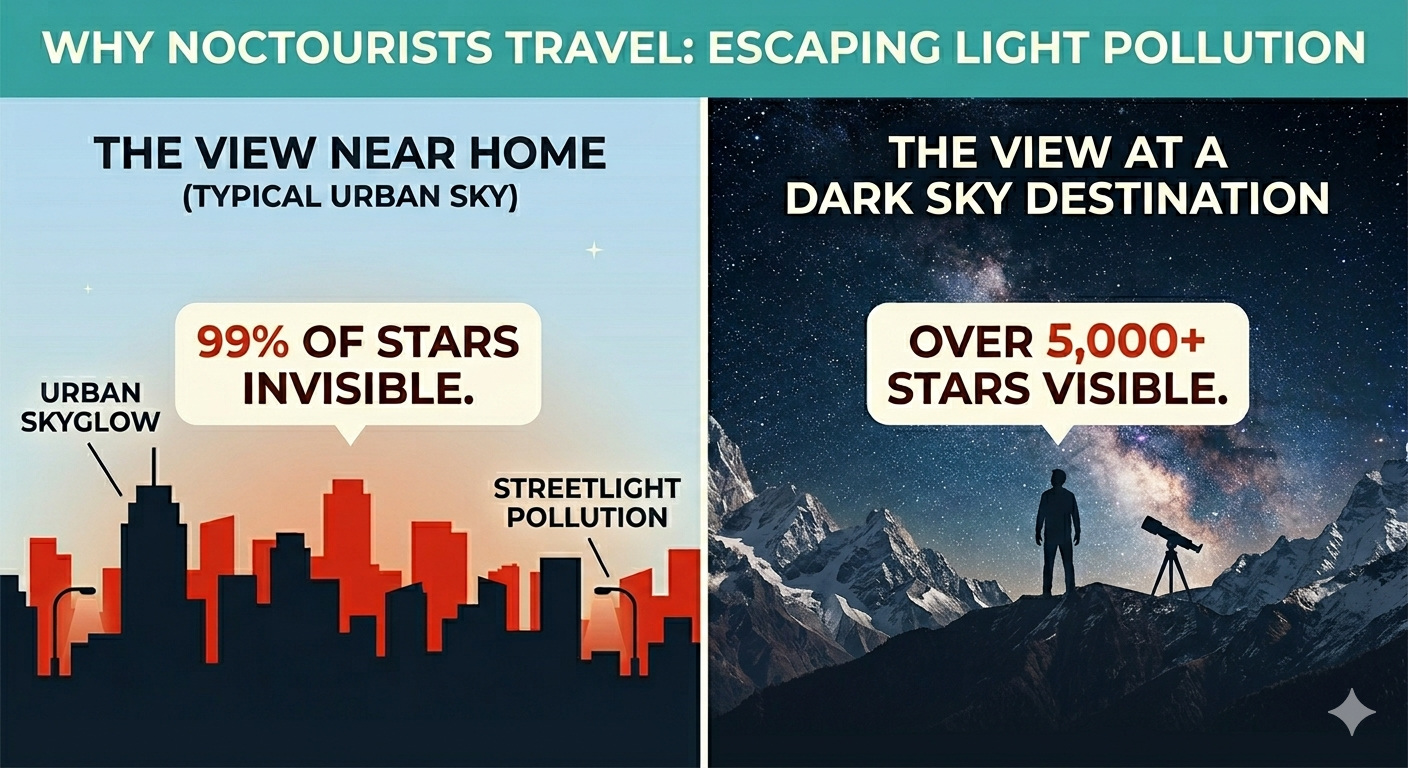
Noctourism is travel planned around nighttime experiences. It is currently one of the fastest-growing experiential segments. In fact, Booking.com designated it a top travel trend for 2025. Nearly two in three global travelers surveyed have considered darker-sky destinations for stargazing, once-in-a-lifetime cosmic events, or simple constellation tracking.
Meanwhile, Wayfairer Travel reported a 25% rise in noctourism bookings over the past year. Night city tours, truffle hunting after dark, full-moon events, and the Northern Lights account for much of this increase.
There are plenty of new opportunities for rural and outdoor-adjacent destinations. A dark sky certification or a curated nocturnal experience program for the right property can define a brand for noctourists. Just remember the key to effective dark sky tourism is to turn a lack of something, namely light pollution, into a bookable asset.
The Increase Natural Phenomenon Travel
The 2024 Total Solar Eclipse generated roughly 12 million travelers moving into the path of totality across 15 states. That made it the largest single mass travel event in the United States last year. Tour packages are already being built around the next major eclipse in August 2026.
Natural phenomenon tourism has expanded to include events such as the Northern Lights, geysers, bioluminescent bays, synchronous fireflies, and volcanic activity. Phenomenon-driven travelers are planning-intensive and spend at above-average rates. Destinations with calendars full of well-planned events should see an increase in bookings.
Beating the Heat With Coolcations
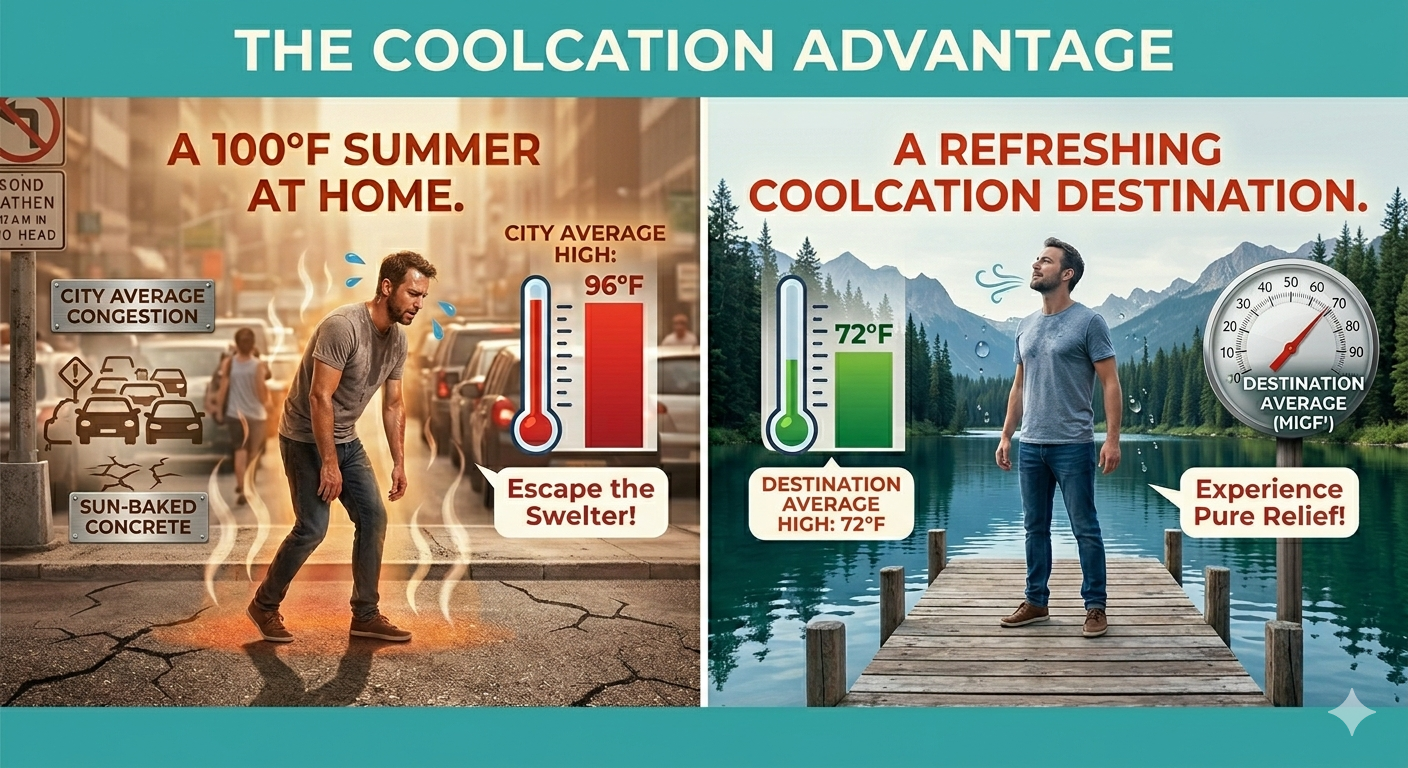
Travelers are actively avoiding historically popular warm destinations during peak heat months. This climate-driven travel behavior is real and measurable, creating new tourist seasons that did not exist a decade ago.
About 36% of American travelers found coolcations appealing, according to late-2024 research from Future Partners. Popular destinations include Snowshoe Mountain Resort in West Virginia, Panama City Beach, and Lake Tahoe.
The coolcation travel trend offers a clear directive for marketers. If your destination is cooler than average during peak heat months and you are not actively marketing that as an advantage right now, you are sitting on an underutilized asset.
Keep in mind that you don’t have to over-explain the climate shift to your audience. You only need to position your destination as the refreshing, comfortable alternative to their usual sweltering summer trip.
Values-Forward: Purpose-Driven and Conservation Travel
The conservation travel trend tends to attract an educated and affluent crowd. The average traveler in this category has longer dwell times and a higher spend. Think of them as values-first and purpose-driven. They value habitat restoration, cultural preservation, and community-based development projects.
Reaching this audience requires plain-spoken honesty. Focus on program outcomes, because travelers in this segment know the difference between genuine impact and a marketing veneer.
The Strategy Going Forward
The outdoor travel audience was once a big umbrella, but now it’s fragmented across five different segments. Five sets of motivations require five different creative and channel strategies to reach them effectively.
Most outdoor brands are spending most of their budget speaking to just one of these five. Which of the other four are you leaving to your competition? We built a free Brand Grader that scores your website and marketing content against the factors that matter most to experience-driven consumers. It takes about 5 minutes and gives you a specific benchmark, along with recommendations, to see how well you are speaking to multiple outdoor segments. Check it out here.
Also, don’t forget to read the next article in our experiential travel series, “Slow Down, Learn Something, Log Off,” to understand what motivates the inner-journey traveler. <link>
Source List
Future Partners, State of the American Traveler, 2024