
Follow the Research Journey Not Just the Platform
If the experience increasingly influences where people choose to travel, media planning has to account for how they research that experience.
A traveler comparing beach destinations may move through media very differently from someone searching for the best place to learn to fly-fish, attend a major music festival, or take a family on its first rafting trip.
That does not require abandoning proven travel media strategies or moving budgets wholesale into the newest platform. It requires understanding the role each channel plays as consumers move from curiosity to serious consideration.
Start With the Experience
Media planning often begins with familiar questions. Where can we efficiently reach the audience? Which channels have performed? Where can we build awareness or capture intent?
For experience-driven consumers, add another: Where would someone go to learn about this particular experience?
The answer may change dramatically by motivation. A parent considering an attraction may look for reviews, videos of a typical visit, and practical information about age appropriateness. An experienced skier researching a new mountain may spend time with trail maps, conditions, enthusiast content, community discussions, and long-form video.
A culinary traveler might follow a chef, subscribe to a food newsletter, or build an itinerary around restaurants and markets before choosing a hotel. These are not simply different audiences. They are different research behaviors.
AI-powered search and assistants are also becoming part of this discovery process. A traveler can ask for family-friendly rafting trips within a certain drive time, compare difficulty levels, or build a short list of destinations around a specific interest. These tools can compress several stages of research into one starting point, even though the traveler may still visit search results, reviews, videos, and brand websites before deciding.
Assign Each Channel a Job
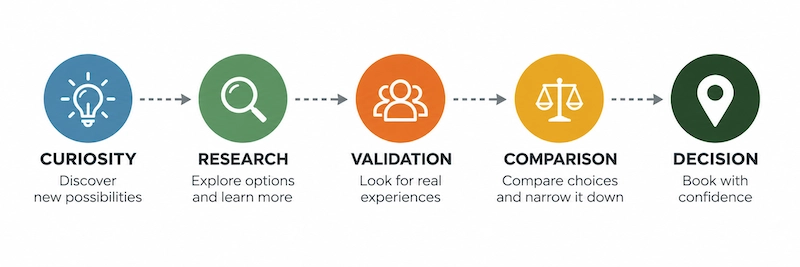
Search, paid social, video, programmatic media, traditional media, and partnerships can all play meaningful roles. The important question is what job each one is doing.
Some channels introduce an experience. Others help a traveler understand it, provide third-party validation, enable comparison, or capture the decision when intent becomes explicit.
That distinction matters because using the same immediate conversion metric for every channel can distort the plan. Creator content that helps someone understand an unfamiliar experience is doing a different job from paid search capturing a query from someone ready to act. Both may be valuable, but they should not be expected to perform the same way.
Map the Research Environment
Experience-driven planning can broaden the definition of a relevant media environment. Depending on the audience and experience, marketers may need to consider YouTube, Reddit, TikTok, enthusiast communities, niche publishers, podcasts, newsletters, and experience marketplaces alongside established travel channels.
These environments matter because consumers use them to answer questions traditional advertising may not resolve: What is it really like? Is it worth the money? How difficult is it? What should I know before I go? Who is it for?
A short ad may spark interest. A detailed video, community conversation, or credible third-party review may turn that interest into confidence.
That does not automatically make every research environment a paid media opportunity. The right response may involve content, creator partnerships, public relations, organic participation, or simply ensuring the brand is represented accurately when consumers investigate. Media planning should understand the full ecosystem before deciding where paid investment belongs.
AI research belongs on that map, but it should not be treated as one more platform to buy. AI-generated answers may draw from brand websites, editorial coverage, reviews, videos, and community conversations. The planning question is not only whether a brand can advertise within an AI product. It is whether the experience is represented clearly and credibly in the sources those tools use.
Let Motivation Shape Search Strategy
Search offers one of the clearest examples of experience-led behavior.
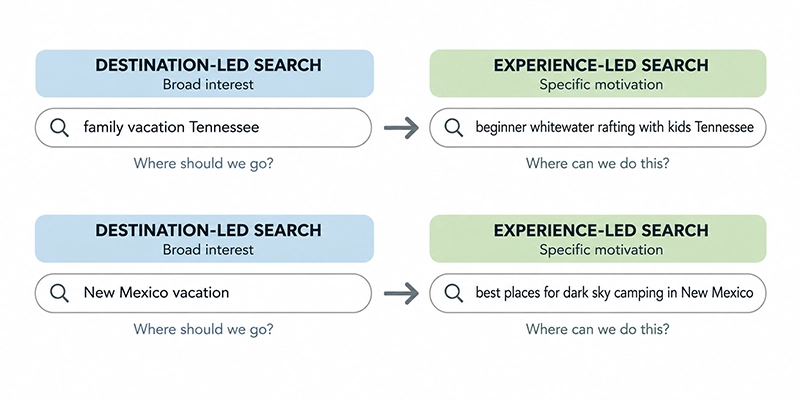
Broad destination terms still matter. But marketers should also examine how people search when the experience leads the decision.
“family vacation Tennessee”
reveals less about motivation than:
“beginner whitewater rafting with kids Tennessee”
The same is true of “New Mexico vacation” compared with “best places for dark sky camping in New Mexico.” The more specific query shows what the traveler wants from the destination.
That creates opportunities beyond adding long-tail keywords. Search behavior can identify valued experiences, guide landing-page strategy, and inform creative across the broader media plan.
Do Not Confuse Niche With Insignificant
A channel or content environment does not need mass reach to be strategically useful. A smaller audience with a defined interest may be highly valuable when the product serves a specific experience.
Niche media does not automatically deserve more investment. Scale, cost, measurability, and conversion potential still matter. The point is that reach alone should not determine relevance.
A destination building broad awareness and an outfitter selling a limited number of premium expeditions have different media requirements. Experience-driven planning should make those distinctions clearer rather than produce one universal channel prescription.
Test the Behavior, Not the Trend
Before making a major budget shift, start with a hypothesis. Which experiences appear to motivate the highest-value visitors? Where do those travelers research? What questions are they trying to answer? Which channels help answer them, and where are the gaps?
Then test the behavior. That may mean building experience-specific search campaigns, comparing creator partnerships with standard social creative, or creating a landing page around one activity instead of the destination overall.
Match measurement to the channel’s role. Relevant outcomes may include qualified site behavior, search activity, engaged visits, inquiries, bookings, visitation, or incremental reach. Clicks alone rarely explain how an unfamiliar experience became a confident decision.
Follow the Consumer
Experience-driven media planning is not a mandate to move money from one set of platforms to another. It is a reminder that consumer behavior should come before the channel recommendation.
When marketers understand what experience someone is seeking, how they research it, and what information moves them closer to a decision, the media plan becomes more intentional.
The question changes from “Where should we advertise?” to “Where can we meaningfully influence this decision?”
Watauga Group’s Winning the Experience-Driven Consumer research examines how experience-led decisions are changing travel and outdoor marketing. Contact us to discuss how those insights can inform audience, media, and measurement strategy for your brand.
Frequently Asked Questions
What is experience-driven media planning?
It is a planning approach that considers the experience motivating the consumer, how that person researches it, and the role each channel can play in moving the decision forward.
How does experience-driven planning differ from conventional travel media planning?
It adds motivation and research behavior to the usual audience, geography, channel performance, and funnel considerations. The goal is to understand where consumers learn about the experience, not only where they can be reached.
Which channels are most important for experience-driven travelers?
There is no universal channel mix. Search, video, social media, creator content, niche publishers, community platforms, traditional media, and partnerships may all matter depending on the experience and audience.
How should marketers measure these channels?
Measure each channel against the job it is designed to perform. Relevant outcomes may include reach, engaged visits, qualified site behavior, search activity, inquiries, bookings, visitation, and incremental impact.
Should travel marketers shift more budget into niche platforms?
Only when audience relevance, scale, cost, and likely business impact support the decision. Niche does not automatically mean effective, but a smaller highly relevant audience may be more valuable than broad reach with weak fit.
How does AI change the travel research journey?
AI-powered search and assistants can help travelers compare options, refine preferences, and build short lists through conversational questions. Brands should treat AI as another research interface supported by accurate owned content, credible third-party coverage, reviews, video, and community discussion.